

Oops, My SIM Card Expired in Xi’an: A Traveler’s Guide to Avoiding (and Fixing) the Nightmare
Let me set the scene: I’m standing in the middle of Xi’an’s Muslim Quarter, stomach rumbling, surrounded by the scent of grilled lamb and steaming roujiamo (Chinese burgers). My phone’s GPS had just led me to the most famous biangbiang noodle spot, and I was ready to order. But when I pulled out my phone to show the vendor a picture of “extra spicy,” the screen flashed: “No Service.” Panic hit. I tried opening WeChat to ask my friend for help—nothing. Then I tried paying with Alipay—error. My SIM card, which I’d thought had “plenty of time left” when I left home, had expired.
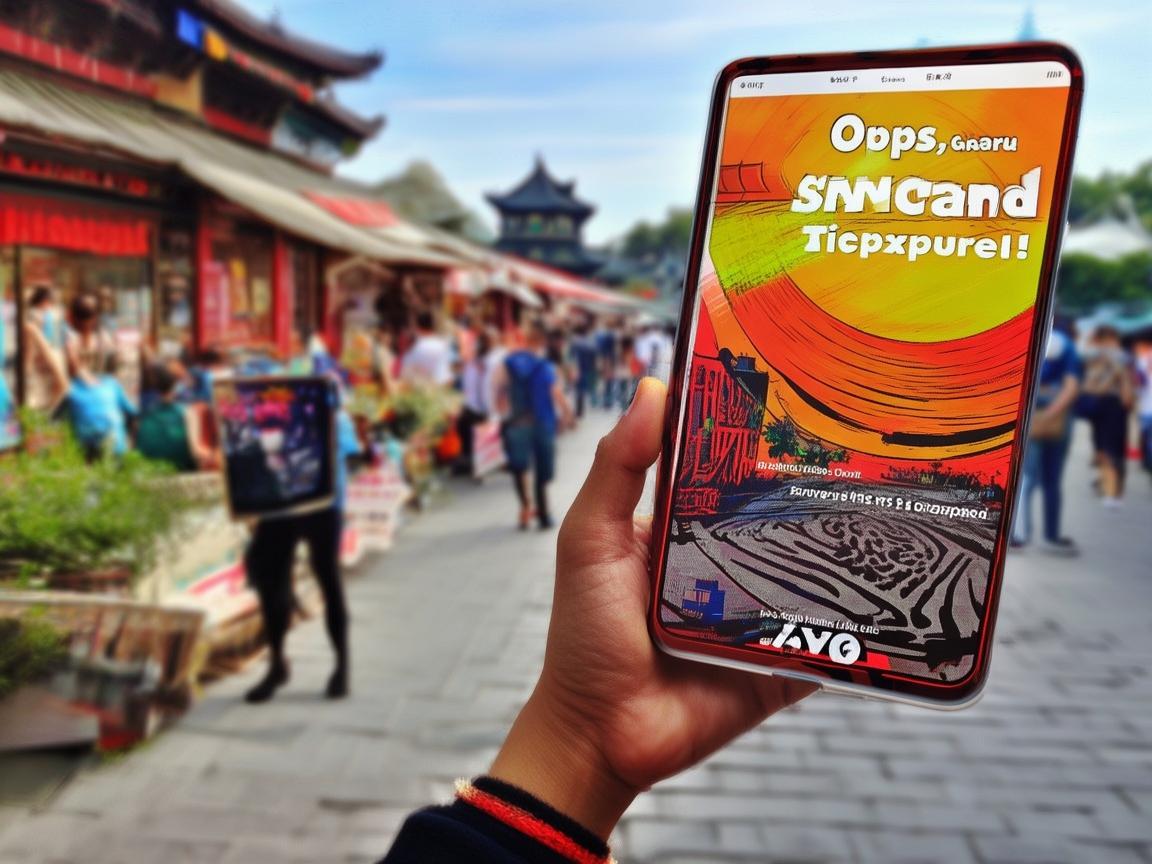
Oops, My SIM Card Expired in Xi’an: A Traveler’s Guide to Avoiding (and Fixing) the Nightmare
If you’re traveling in China, a working SIM card isn’t just a “nice-to-have”—it’s your lifeline. It’s how you navigate (Baidu Maps), pay for everything (WeChat Pay/Alipay), translate menus (Pleco), and call your hotel. Mine expired on day 3 of a 5-day trip to Xi’an, and let me tell you: scrambling to fix it while lost in a crowded market is not how I wanted to spend my afternoon. But I survived, and I learned a lot. Here’s your practical, no-BS guide to dealing with an expired SIM card in Xi’an—so you don’t have to panic like I did.
First: Why Your SIM Card Might Expire (And How to Avoid It)
Before we talk fixes, let’s prevent the problem. Most foreign travelers buy a Chinese SIM card at the airport before their trip, or online. These cards usually come with a 30-day validity, but check the fine print. Some expire exactly 30 days after activation, not after you leave China. I’d bought mine a month before my trip, activated it the second I landed in Beijing, and assumed it’d last until I flew out of Xi’an. Wrong. It expired on day 30, which was mid-trip for me.
Pro tip: If you’re staying longer than 2 weeks, buy a “long-term” SIM (many now offer 60- or 90-day plans) or ask the vendor to set it to expire after your departure date. And always write down your activation date and the expiration date when you buy it—no relying on memory!
Step 1: Confirm It’s Really Expired (Not Just a Glitch)
When your phone says “No Service,” don’t assume the worst immediately. I spent 10 minutes restarting my phone, toggling airplane mode, and crying internally before I realized: maybe it’s a network issue? Here’s how to check:
- Try calling a number: Dial your own phone number (or a friend’s) from another phone. If it goes straight to voicemail, your SIM is dead.
- Check for signal bars: If you have bars but “No Service,” it might be a network outage (rare in Xi’an, but possible). Wait 10 minutes, or move to a different street.
- Call your provider’s customer service: If you have a Chinese number, dial 10086 (China Mobile), 10010 (China Unicom), or 10000 (China Telecom). Press “English” if prompted, and ask if your SIM is active. They’ll tell you straight up.
Step 2: If It Is Expired—Here’s How to Fix It in Xi’an
Once you’ve confirmed your SIM is expired, don’t worry. China’s telecom system is very set up for tourists, and fixing it is easier than you think. You have two options: renew your current SIM or buy a new one. Renewing is faster if you have your original number; buying new is fine if you don’t mind a new number.
Option 1: Renew Your Expired SIM (If You Have the Original Card)
This is the best option if you want to keep your old number (e.g., if you’ve saved it to WeChat/Alipay). I chose this because I didn’t want to re-link all my payment apps.
Where to go:
- Carrier stores: The most reliable places. In Xi’an, you’ll find China Mobile, China Unicom, and China Telecom stores everywhere—near major attractions (like the Bell Tower, Muslim Quarter, or Big Wild Goose Pagoda), in shopping malls (e.g., Century Ginwa), and even in some subway stations. Look for the bright red (China Mobile), blue (China Unicom), or green (China Telecom) signs.
- Airport stores: If you’re near Xi’an Xianyang International Airport (XIY), there are carrier stores in the domestic and international departure/arrival halls. Convenient if you’re leaving soon, but a bit out of the city center.
What to bring:
- Your expired SIM card (don’t lose it! You’ll need it to reactivate).
- Your passport (foreigners must show a passport to buy/renew SIMs—no exceptions).
- Cash or a Chinese bank card (some stores accept WeChat/Alipay, but cash is safer).
The process (step-by-step):
- Find a store: Walk in, and you’ll see a counter with staff. If they look busy, take a number (there’s usually a machine for this).
- Tell them what you need: Say, “My SIM card expired, I want to renew it.” If they don’t speak English, show them your SIM card and point to the expiration date (if you wrote it down). Or use Google Translate: “我的SIM卡过期了,想续费” (Wǒ de SIM kǎ guòqíle, xiǎng xùfèi).
- Show your passport: Hand it over. They’ll scan it and register your renewal (this is required by Chinese law).
- Choose a plan: They’ll offer you data/voice packages. For tourists, a “tourist plan” (usually 10-30GB of data + some calls) is best. I renewed with China Mobile for ¥88 (~$12) for 30 days, 20GB of high-speed data, and 100 minutes of calls.
- Pay: Hand over cash or tap your card. They’ll give you a receipt.
- Wait 5-10 minutes: The staff will put your SIM card into a machine to reactivate it. Once done, they’ll hand it back to you.
- Test it!: Put the SIM in your phone, turn it off and on, and check if you have service. Try opening WeChat or Baidu Maps to confirm.
Time taken: 20-30 minutes, max. I did this at a China Mobile store near the Muslim Quarter, and the staff were super helpful—even spoke a little English.
Option 2: Buy a New SIM Card (If You Don’t Mind a New Number)
If you lost your original SIM, or don’t care about keeping the old number, buying a new one is just as easy. The process is almost identical, but you’ll get a fresh SIM card instead of renewing.
Where to buy: Same as above—carrier stores, airports, or even some convenience stores (like 7-Eleven, though they have fewer options).
What to bring: Passport, cash/card.
The process:
- Go to a carrier store (China Mobile is the most widespread, with the best coverage in Xi’an).
- Say, “I want to buy a new SIM card for tourists.” Use Google Translate if needed: “我想买一张旅游SIM卡” (Wǒ xiǎng mǎi yī zhāng lǚyóu SIM kǎ).
- Show your passport. They’ll register your info (same as renewing).
- Choose a plan. Tourist plans are usually “prepaid” (you pay upfront, no contract). Popular options:
- China Mobile: ¥30 for 10GB data (7 days), ¥58 for 20GB (30 days).
- China Unicom: ¥39 for 15GB data (15 days), ¥99 for 30GB (30 days).
- China Telecom: ¥29 for 8GB data (7 days), ¥79 for 20GB (30 days).
- Pay, get your new SIM, and activate it in-store (they’ll help you put it in your phone).
Bonus: Some stores now sell “eSIM” for compatible iPhones (iPhone XS and newer). If you have an eSIM-compatible phone, this is way easier—no physical SIM to lose! Just ask, “Do you have eSIM for tourists?” (你们有旅游eSIM吗?).
Step 3: If You’re Really Stuck—Temporary Fixes
What if you’re in a hurry (e.g., your train to Xi’an leaves in an hour) and can’t get to a carrier store? Or it’s Sunday and all stores are closed? Here are two temporary options to get you by:
Rent a Portable WiFi Device
Xi’an’s airport, train stations, and some hotels rent portable WiFi devices (called “MiFi”). These are small gadgets that give you WiFi for multiple devices (your phone, tablet, laptop).
Where to rent:
- Xi’an Xianyang Airport: Look for “WiFi Rental” counters in the arrival hall. You’ll need your passport and a deposit (usually ¥500-¥1000, refundable when you return it).
- Train stations: Xi’an Railway Station and Xi’an North Railway Station have rental counters, but they’re harder to find (ask staff for “WiFi租赁” – WiFi zūlìn).
- Hotels: Many mid-range/high-end hotels rent MiFi to guests—ask at reception.
Cost: Around ¥20-¥30 per day, plus a deposit. For example, I rented one at the airport for ¥25/day (deposit ¥500) when my SIM expired on a Sunday (stores were closed). It worked great—just turn it on, connect your phone to the WiFi, and you’re good to go.
Downside: You have to carry the device around, and battery life is ~8 hours (so bring a power bank).
Use Free WiFi (But It’s Unreliable)
Xi’an has some free WiFi hotspots, but don’t rely on them for anything important. Here’s where to find them:
- Hotels/Cafes: Most cafes (like Starbucks) and hotels offer free WiFi, but you often need a phone number to get the password (catch-22 if your SIM is dead). Some cafes (like local tea shops) have open WiFi, but it’s slow.
- Tourist sites: The Big Wild Goose Pagoda, Muslim Quarter, and City Wall have free WiFi, but it’s often overcrowded and cuts out.
- Subway: Xi’an’s subway has free WiFi (“Metro WiFi”), but you need to scan a QR code to log in—hard without a Chinese number.
When to use this: Only for quick checks (e.g., “What time does the museum close?”). Never for navigation or payments—you’ll regret it.
Step 4: After Fixing Your SIM—Update Everything!
Once your SIM is working again, don’t forget to update these critical things:
- WeChat/Alipay: If you got a new number, you’ll need to re-link your phone number to these apps. Open WeChat > Me > Settings > Account > Phone Number, and follow the prompts. Same for Alipay > Me > Settings > Personal Information > Phone Number.
- Navigation apps: Update your Baidu Maps or Amap (高德地图) with your new location (if you were lost).
- Emergency contacts: Save your hotel’s phone number, the local police (110), and your country’s embassy in China (for the U.S., it’s +86-10-8531-4000 in Beijing) in your phone.
Final Thoughts: Don’t Let a Dead SIM Ruin Your Trip
Losing phone service in a foreign country is scary, but Xi’an’s telecom system makes it easy to fix. The key is to stay calm—you’re not the first tourist this has happened to! Carrier staff are used to helping foreigners, and most speak enough English to get the job done.
My biggest lesson? Always check your SIM card’s expiration date before you travel, and write it down. And if you’re staying longer than 2 weeks, buy a 60/90-day plan—you’ll save yourself a lot of stress.
Now, go enjoy Xi’an! The terracotta warriors, the city walls, the street food—they’re all waiting. Just make sure your SIM card is ready to come along.
Xi’an Airport Transfer Service
Private English-speaking driver service in Xi’an operated directly by Bruce Zhang. 24/7 airport pickup and hotel transfer for foreign travelers.
Helpful for Your Trip in Xi’an
Solved: My China SIM Card Nightmare in Xi’an (and How You Can Fix Yours Fast!)
2026-06-03Traveling Xi’an: A Tourist’s Guide to Staying Connected and Saving Money on China SIM Packages
2026-06-03China SIM Roaming Setup: A Traveler’s No-Stress Guide
2026-06-03Reactivate Your China SIM: A Traveler’s Guide to Staying Connected in Xi’an
2026-06-03Xi’an on a Budget: My Essential Pocket WiFi Tips for Travelers
2026-06-03A Traveler’s Survival Guide to Xian: Connectivity, Ancient Walls, and Unforgettable Eats
2026-06-03Navigating China’s SIM Verification as a Tourist: My Xi’an Survival Guide
2026-06-03Xi’an Travel Guide: How to Score a Reliable China SIM Shop (and Why It’s a Lifesaver)
2026-06-03Your China SIM Survival Guide: Staying Connected in Xi’an Like a Local
2026-06-02Your Lifeline in Xi’an: Why a China SIM Card is a Travel Game-Changer
2026-06-02