

Xi’an Travel: Offline Stores & Payment Tips That Actually Work (From a First-Time Visitor)
Landing in Xi’an, I was buzzing with excitement—ancient city walls, terracotta warriors, and the legendary Muslim Quarter! But within an hour of arriving, I was sweating in a tiny breakfast shop, staring at a shopkeeper who shook his head at my credit card and pointed to a “Cash Only” sign. “Mei you zhifubao?” (No Alipay?) she asked, gesturing to my phone. I’d assumed China was all mobile payments, but that morning taught me a hard truth: in Xi’an, offline stores and cash still rule the roost in many places. After a week of trial and error (and way too many confused hand gestures), I’ve put together a guide that actually helps—no fluff, just what you need to know about paying like a local.
First Things First: Xi’an’s Payment Mix—Mobile, Cash, and “Offline”
Before I dive into stores, let’s clear up payment basics. In big malls, chain restaurants (like Haidilao or Starbucks), and major attractions (like the Terracotta Army), mobile payments (Alipay and WeChat Pay) are king. But “offline stores”—think family-run eateries, street food stalls, local craft shops, and neighborhood markets—often operate on their own terms. Many don’t take international credit cards, and some even skip mobile payments if the owner is older or doesn’t trust tech.
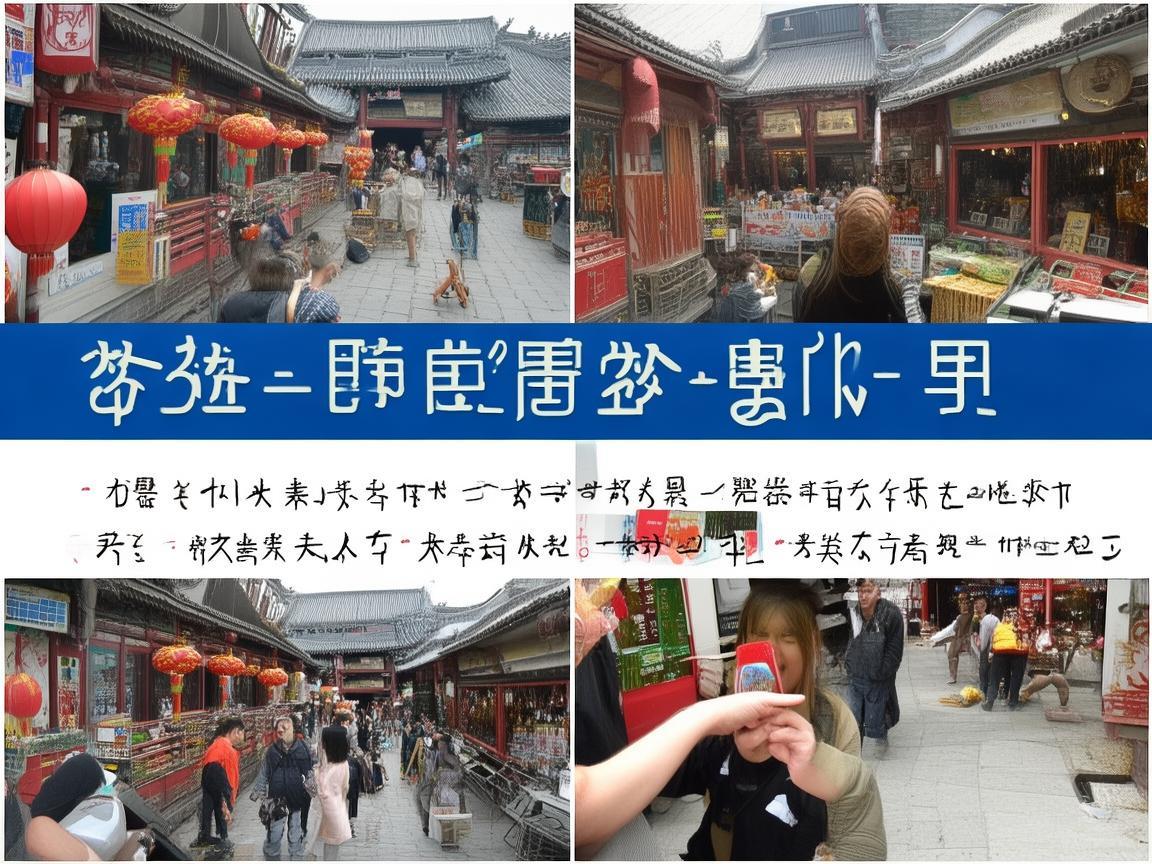
Xi’an Travel: Offline Stores & Payment Tips That Actually Work (From a First-Time Visitor)
Key takeaway: You need both mobile wallets and cash. Don’t be like me, thinking my credit card would cover everything—learn from my mistakes!
Offline Stores That Demand Cash (And Where to Find Them)
Xi’an’s charm is in its offline spots—the hidden alleys, generational food stalls, and family-owned shops. Here’s where cash isn’t just helpful, it’s essential:
Muslim Quarter (Huimin Jie) Street Food Stalls
The Muslim Quarter is a must-visit, but skip the fancy, tourist-trap restaurants at the entrance. The real gems are the tiny stalls run by elderly couples making roujiamo (Chinese hamburgers) or yangrou paomo (bread soaked in lamb soup). I learned this the hard way: at a stall near the Great Mosque, the owner—a grandma in her 70s—just stared at my phone when I tried to open Alipay. She pointed to a tin box with “现金” (cash) written on it. I fumbled for 10 RMB, and she handed me a steaming, juicy roujiamo worth every penny.
Pro tip: Carry small bills (10s, 20s, 50s). Many street vendors can’t break 100s, and you don’t want to hold up a line while they scramble for change.
Local Breakfast Shops (Especially in Neighborhoods)
Xi’an’s breakfast culture is incredible—you’ve got baozi (steamed buns), youtiao (fried dough sticks), and doujiang (soy milk) from tiny shops near residential areas. I stayed near the South Gate, and my go-to breakfast spot was a hole-in-the-wall with two plastic stools and a wok. The owner, a middle-aged man, only took cash. One morning, I tried to pay with WeChat, and he laughed, saying, “I don’t have time to scan codes—I’m busy making youtiao!” He pointed to a small basket by the door where people dropped cash.
Where to find these: Wander streets away from main tourist areas. Look for shops with handwritten menus, no English, and a line of locals—they’re cash-only.
Craft Shops in Shuyuan Men (Bookworm Street)
Shuyuan Men, near the Bell Tower, is lined with shops selling calligraphy brushes, ink stones, and paper lanterns. These are “offline stores” at their best—family-run, with owners who might not speak English but take pride in their crafts. At one shop, I wanted to buy a small paper lantern. The owner, a man in his 60s, shook his head when I offered Alipay. “Cash only,” he said, gesturing to a wooden box under the counter. I paid 30 RMB, and he even gave me a quick lesson on how to hold a calligraphy brush.
Why cash here? Many craft owners are older and prefer cash to avoid mobile payment fees (yes, even in China, apps charge small transaction fees). Plus, haggling is more common with cash—you can’t really “negotiate” a price on a screen!
Mobile Payments: How to Use Them (Even as a Foreigner)
Okay, cash is crucial, but mobile payments will still make your life easier—if you set them up right. Here’s what worked for me:
Alipay vs. WeChat Pay: Which to Use?
- Alipay: Better for tourists. It has an “International Version” that lets you link foreign credit cards (Visa, Mastercard). I used this for big purchases: Terracotta Army tickets (120 RMB), a taxi from the airport (150 RMB), and dinner at a mid-range restaurant.
- WeChat Pay: Trickier for foreigners. It’s more popular locally, but linking foreign cards can be a hassle. I only used it when friends sent me money (more on that later).
Step-by-step for Alipay International:
- Download Alipay from the App Store/Google Play (make sure it’s the “Alipay” app, not a local version).
- Open it, tap “Me,” then “Wallet,” and look for “International Users.”
- Link your credit card—you’ll need to enter your card number, CVV, and expiration date.
- Add money: You can top up with your card (though there’s a small fee, ~3%). For small purchases, I kept 100-200 RMB in my Alipay “balance.”
Where mobile payments shine:
- Malls and chain stores: The Grand Mall near the South Gate, or the K11 mall—all take Alipay/WeChat.
- Tourist attractions: Terracotta Army, Big Wild Goose Pagoda—you can scan a QR code at the ticket office to pay.
- Taxis and Didi (China’s Uber): Most drivers accept Alipay. Just open the app, tap “Transport,” and scan the QR code on their dashboard.
The “Offline Store” Payment Lifesaver: When Your Phone Dies or You Have No Signal
One afternoon, I was exploring the city walls and got lost in a maze of alleys near the East Gate. My phone died completely, and I had no cash on me—panic mode! I ducked into a small convenience store (a “xiao mao dian”) to ask for help. The owner, a young woman, saw my panicked face and said, “No problem!” She let me use her landline to call my hotel, and then, when I tried to pay her for a bottle of water, she just waved me off. “Welcome to Xi’an!” she said.
This taught me two things:
- Convenience stores are your offline payment heroes. Places like 7-Eleven or local “xiao mao dian” take cash and often have mobile payment terminals. They’re also great for buying water, snacks, or even a cheap power bank (I bought one for 50 RMB when mine died).
- Locals are kind. Even if you can’t pay, most people will help you out—just be polite!
Cash Tips: Where to Get It and How Much to Carry
By now, you get it: cash is non-negotiable. Here’s how to handle it:
Where to Exchange Money (or Withdraw Cash)
- Airports: Xi’an Xianyang International Airport has currency exchange counters. Convenient, but the exchange rate is terrible (I got 6.8 RMB/USD instead of the 7.1 rate downtown). Only do this if you’re desperate.
- Banks: Better rates. I went to the Bank of China near the Bell Tower. You’ll need your passport—they’ll give you cash on the spot. Pro tip: Go early (before 10 AM) to avoid long lines.
- ATMs: Many Bank of China and ICBC ATMs accept foreign cards. I withdrew 500 RMB at a time (the daily limit for foreign cards is usually 5,000 RMB). ATMs are in malls, near tourist sites, and in big neighborhoods.
How Much Cash to Carry
I’d recommend keeping 300-500 RMB in small bills (10s, 20s, 50s) at all times. That’s enough for:
- 5-6 street food meals (roujiamo, yangrou paomo, etc.)
- Breakfast at a local shop for a week
- Small souvenirs (paper lanterns, keychains)
Keep the rest in your mobile wallet or credit card for big purchases.
My “Oops” Moments (And What I Learned)
-
Mistake 1: Assuming all “offline stores” take mobile payments. I tried to buy a jianbing (savory crepe) from a street vendor, and she just stared at my phone. I had to walk 5 minutes to a convenience store to get cash.
Lesson: Always have cash on you, even for small purchases. -
Mistake 2: Not breaking a 100 RMB bill early. At a Muslim Quarter tea stall, I tried to pay 20 RMB for a cup of tea with a 100. The owner couldn’t break it, so I had to buy more tea (and ended up spending 80 RMB).
Lesson: Break big bills at convenience stores or malls—they always have change. -
Mistake 3: Forgetting that some “offline” apps need internet. One night, I tried to pay for dinner at a local restaurant with Alipay, but the Wi-Fi was down. The waiter said, “No problem—use cash!”
Lesson: Alipay and WeChat have “offline payment” modes (you need to set them up in advance), but I never got around to it. Cash is the ultimate backup.
Final Verdict: The Perfect Payment Strategy for Xi’an
After a week in Xi’an, here’s my foolproof plan:
- Start with cash: Exchange $100-150 USD at a Bank of China (or withdraw from an ATM) for small bills.
- Set up Alipay International: Link your credit card and top up 200-300 RMB for big purchases.
- Embrace offline stores: Carry cash for street food, local shops, and craft stalls—they’re where the real magic happens.
- Have a backup: Download a map (Google Maps works in most areas), keep a power bank handy, and don’t be afraid to ask for help (locals are amazing!).
Xi’an is a city of contrasts—ancient walls and modern malls, cash-only stalls and high-tech apps. But with a little prep, you can skip the stress and focus on what matters: biting into a juicy roujiamo, watching the sunset from the city walls, and getting lost in its beautiful, chaotic streets. Happy travels—and don’t forget your cash!
Xi’an Airport Transfer Service
Private English-speaking driver service in Xi’an operated directly by Bruce Zhang. 24/7 airport pickup and hotel transfer for foreign travelers.
Helpful for Your Trip in Xi’an
Traveling Xi’an as a Tourist: PayPal and Other Payment Tips You Need to Know
2026-06-03Xi’an Travel: When Your Foreign Card Gets Rejected—Practical Tips to Save Your Trip
2026-06-03UnionPay in China: A Tourist’s Practical Guide from Xi’an
2026-06-03Xi’an Unlocked: A Traveler’s Love Letter to Scan-to-Pay
2026-06-03Navigating Xi’an: A Traveler’s Guide to Payments, Registration, and Practical Tips
2026-06-03Navigating KFC Payments in China: A Traveler’s Practical Guide
2026-06-03Xi’an for Tourists: A Practical Guide to Payments (Learn from Expats!)
2026-06-03Xi’an Theme Park Payment: A Tourist’s Practical Guide (From Someone Who Almost Paid Too Much!)
2026-06-02Navigating Xian: A Foreigners Guide to the Best Way to Carry Money in China
2026-06-02Xi’an Travel Made Easy: My NFC Pay Tips for Tourists
2026-06-02