

Navigating Xi’an Like a Local: How Digital Wallets Made My Trip a Breeze
Landing in Xi’an for the first time, I was equal parts excited and overwhelmed. As a history buff, I’d dreamed of walking the ancient city walls, marveling at the Terracotta Warriors, and getting lost in the Muslim Quarter’s bustling lanes. But there was one thing nagging at me: How would I handle payments? I’d heard China was a cashless society, but as a tourist from the U.S. where card payments still rule, the idea of relying solely on digital wallets felt daunting. Spoiler alert: by the end of my trip, I couldn’t imagine navigating Xi’an without them. Here’s how digital wallets—specifically Alipay and WeChat Pay—transformed my experience, with practical tips for any traveler looking to dive into cashless travel in this incredible city.
Before You Go: Prepping Your Digital Wallets
My first step was downloading two apps: Alipay and WeChat Pay. Both are ubiquitous in Xi’an, but I quickly learned they serve slightly different purposes. Alipay, often called China’s “super app,” is great for everything from subway rides to hotel bookings, while WeChat Pay is deeply integrated into social interactions (like splitting bills with friends) and smaller vendors.
Crucial Tip: Link an International Card
At first, I tried adding my U.S. debit card to both apps, but it kept getting declined. After some research, I discovered that many international cards don’t work directly with these wallets unless you enable “overseas payments” with your bank. Even then, some local vendors might not accept foreign cards. The solution? I linked a UnionPay card (which has wider acceptance in China) and added a small amount of Chinese yuan (RMB) via a third-party service like Wise or Remitly. Pro tip: Always carry a little cash (around 200-300 RMB) as a backup—just in case you stumble upon a tiny stall that only takes cash (though this was rare!).
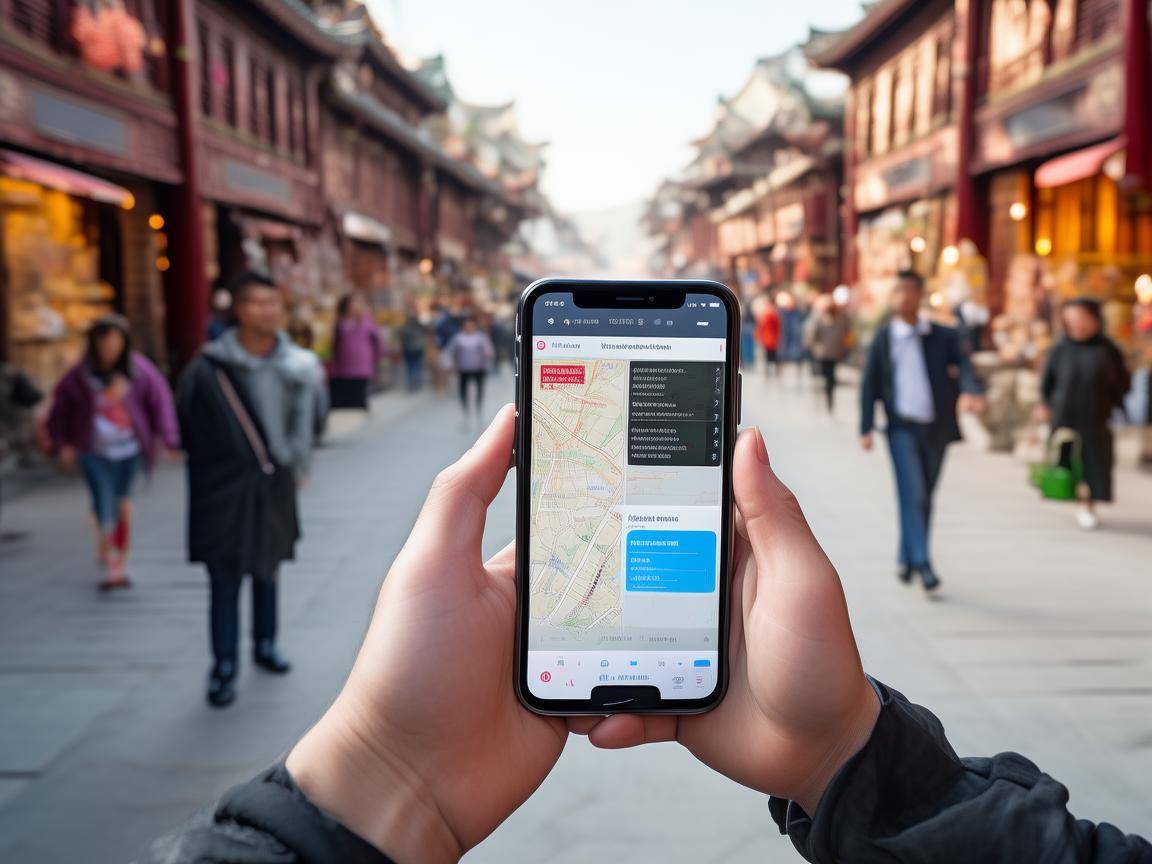
Navigating Xi’an Like a Local: How Digital Wallets Made My Trip a Breeze
Arrival in Xi’an: From Airport to City Center
My first test of digital wallets came right after landing at Xi’an Xianyang International Airport (XIY). I’d pre-booked a ride to my hotel via Didi (China’s Uber), and when the driver arrived, he handed me a QR code. “WeChat or Alipay?” he asked. I opened WeChat Pay, scanned the code, and—boom—payment done in 2 seconds. No fumbling for cash, no currency exchange at the airport (which has terrible rates).
For travelers taking the airport bus or metro to the city center, digital wallets are a lifesaver. At the metro station, I bought a ticket using Alipay’s “Metro Pass” feature. I just scanned the QR code at the ticket machine, selected the number of rides, and the pass was added to my Alipay wallet. When I tapped it at the turnstile, it beeped and let me through—no need to carry a physical card. Bonus: The metro in Xi’an is clean, efficient, and takes you straight to major attractions like the Bell Tower or Muslim Quarter.
Daily Adventures: Food, Attractions, and Getting Around
Xi’an is a food lover’s paradise, and digital wallets made indulging in local specialties a breeze. In the Muslim Quarter, I stopped at a stall selling roujiamo (Xi’an’s famous “Chinese hamburgers”). The vendor, who spoke no English, pointed to a QR code taped to his cart. I opened Alipay, scanned it, and entered the amount (10 RMB). Within seconds, the payment went through, and I was handed a steaming, juicy roujiamo. No language barrier, no cash needed—just a quick scan.
Even at sit-down restaurants, digital wallets reign. One night, I tried yangrou paomo (bread soaked in lamb soup), a local must-try. After the meal, the waiter brought a small stand with a QR code. I used WeChat Pay to split the bill with my travel buddy (WeChat lets you divide the total and send requests to friends—genius for group travel!). The best part? No waiting for the bill to be printed or dealing with tip calculations (tipping isn’t common in China, so no need to worry about it).
For attractions, digital wallets saved me hours of waiting. At the Terracotta Army, I bought my ticket via Alipay’s “Travel” section. I selected the date and time, paid, and received a QR code. When I arrived, I just showed the code at the entrance—no ticket line, no hassle. The same worked for the Ancient City Wall: I scanned my Alipay QR code at the ticket gate and rented a bike to ride along the top (another digital wallet perk: many bike-sharing apps, like HelloBike, integrate with Alipay/WeChat Pay).
Hiccups and How to Fix Them
Of course, I ran into a few issues—mostly because I was new to the system. Once, I tried to pay at a convenience store (7-Eleven is everywhere in Xi’an, by the way) and got an error message: “Payment failed.” I panicked for a second, then remembered I hadn’t updated my Alipay app. A quick update later, and it worked. Another time, I was in a remote part of the Muslim Quarter where the Wi-Fi was spotty. I switched to mobile data (I’d bought a Chinese SIM card at the airport—super cheap, around 30 RMB for a week with unlimited data), and the payment went through.
Pro Tip: Enable Offline Payments
Both Alipay and WeChat Pay have “offline payment” features. If you’re in an area with no internet, you can still pay by scanning a QR code (for small amounts, usually under 1,000 RMB). Just make sure you’ve enabled this in your app settings beforehand. I tested this at a tiny tea stand in the back alleys of the Muslim Quarter, and it worked like a charm.
Beyond Payments: Digital Wallets as Your Travel Assistant
What surprised me most was how digital wallets became my all-in-one travel tool. Alipay’s “City Card” feature gave me discounts at attractions (like 10% off entry to the Big Wild Goose Pagoda). WeChat Pay’s “Mini Programs” let me book tours (I joined a small group trip to the Terracotta Army via a WeChat Mini Program—no need to download a separate app). I even used Alipay to order a late-night snack from a delivery app (Meituan), which showed up at my hotel in 30 minutes.
One of the coolest features? Real-time currency conversion. When I paid for something, Alipay would show the amount in both RMB and my home currency (USD), so I always knew exactly how much I was spending. No more mental math or carrying a currency converter app!
Final Thoughts: Why Digital Wallets Are a Game-Changer
By the end of my trip, I was a total convert. Digital wallets didn’t just make payments easier—they made my trip more immersive. I could chat with vendors, try street food without hesitation, and explore without worrying about carrying cash. For anyone visiting Xi’an (or really, any city in China), I can’t recommend enough: download Alipay and WeChat Pay, link your card, and embrace the cashless life.
Xi’an is a city where ancient history meets modern tech, and digital wallets are the perfect bridge between the two. They let you focus on what matters: savoring a biangbiang noodle bowl, watching the sunset from the city wall, or marveling at the Terracotta Warriors. So go ahead—scan that QR code. You won’t regret it.
Xi’an Airport Transfer Service
Private English-speaking driver service in Xi’an operated directly by Bruce Zhang. 24/7 airport pickup and hotel transfer for foreign travelers.
Helpful for Your Trip in Xi’an
Traveling Xi’an as a Tourist: PayPal and Other Payment Tips You Need to Know
2026-06-03Xi’an Travel: When Your Foreign Card Gets Rejected—Practical Tips to Save Your Trip
2026-06-03UnionPay in China: A Tourist’s Practical Guide from Xi’an
2026-06-03Xi’an Unlocked: A Traveler’s Love Letter to Scan-to-Pay
2026-06-03Navigating Xi’an: A Traveler’s Guide to Payments, Registration, and Practical Tips
2026-06-03Navigating KFC Payments in China: A Traveler’s Practical Guide
2026-06-03Xi’an for Tourists: A Practical Guide to Payments (Learn from Expats!)
2026-06-03Xi’an Theme Park Payment: A Tourist’s Practical Guide (From Someone Who Almost Paid Too Much!)
2026-06-02Navigating Xian: A Foreigners Guide to the Best Way to Carry Money in China
2026-06-02Xi’an Travel Made Easy: My NFC Pay Tips for Tourists
2026-06-02