

First Days in Xian: A Foreigners Practical Arrival Guide
Landing in Xi’an as a foreign traveler felt like stepping into a living history book—but let’s be real: it also came with a healthy dose of “now what?” Between the airport chaos, language barriers, and figuring out how to even buy a bottle of water, my first 48 hours were a mix of wide-eyed wonder and mild panic. If you’re heading to Xi’an soon, here’s the no-fluff guide I wish I’d had: practical, tested, and written by someone who’s been there (and accidentally ordered tripe soup instead of beef noodles).
Part 1: Getting from the Airport to the City (Don’t Get Ripped Off!)
Xi’an Xianyang International Airport (XIY) is about 45 km from downtown. Here’s your cheat sheet for avoiding scams and overpriced taxis:
Option 1: Airport Express Bus (Best for Budget & Convenience)
- Where to find it: Follow the signs for “Airport Bus” outside baggage claim. There are multiple lines, so check the destination sign carefully.
- Key lines for tourists:
- Line 5: Goes to Xi’an Railway Station (downtown, near the Bell Tower). Fare: ¥25. Travel time: ~1 hour.
- Line 603: Goes to the city center (near South Gate). Fare: ¥25. Travel time: ~1 hour 10 mins.
- Pro tip: Buses run from 6:00 AM to 11:30 PM. They’re air-conditioned, have English announcements, and drop you at major transit hubs. Touts might try to lure you with “private buses”—ignore them.
Option 2: Metro (Cheapest, but a Bit Tricky with Luggage)
- Line 14: Connects the airport to downtown. Fare: ¥8–¥12 depending on your stop. Travel time: ~1 hour.
- How to use: Buy a card at the ticket machine (it accepts cash/credit cards; look for the “English” button). Scan it at the gates, and again when exiting.
- Best stop for tourists: Beilin Station (near the Bell Tower and Muslim Quarter) or North Square of Big Wild Goose Pagoda (near South Gate).
Option 3: Taxi/Didi (Avoid Black Cabs!)
- Official taxis: Yellow-and-green cars with a taxi license on the dashboard. Fare: ~¥150–¥180 to downtown (fixed price, no meter).
- Didi (China’s Uber): Download the app before you leave home (you’ll need a Chinese phone number to register, but you can use a friend’s or buy a cheap SIM at the airport). It’s cheaper and safer than random taxis.
- Red flag: If someone approaches you at the airport yelling “Taxi? Cheap?” walk away. These are unlicensed and will overcharge you.
Part 2: Where to Stay (Pick the Right Neighborhood)
Xi’an’s neighborhoods are like different worlds—pick based on your vibe:
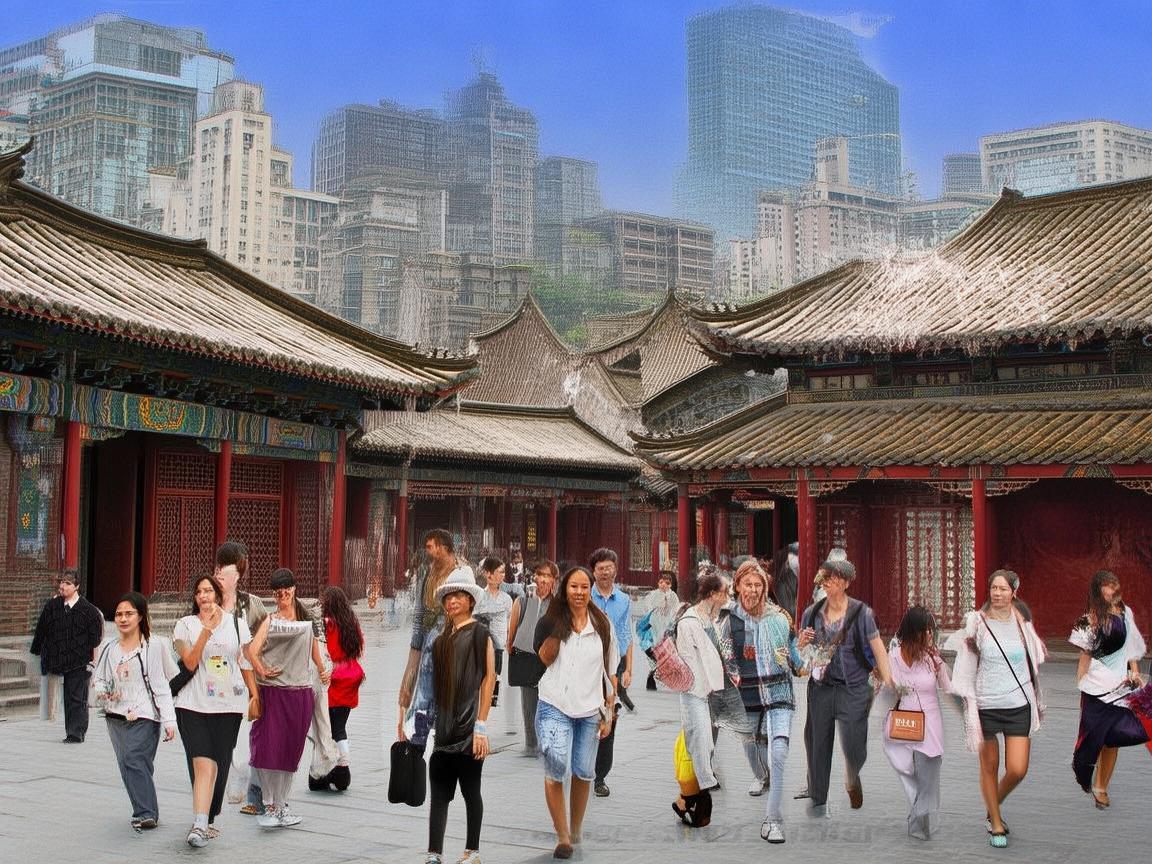
First Days in Xian: A Foreigners Practical Arrival Guide
Best for First-Timers: Muslim Quarter / Bell Tower Area
- Why: Central, walkable to top sights (Bell Tower, Muslim Quarter, Drum Tower), and packed with food stalls.
- Where to stay: Look for hostels or hotels near Bell Tower Metro Station (Line 1/2). I stayed at a hostel called “Backpackers Inn” for ¥80/night—dorm beds, free breakfast, and staff who spoke English and gave great tips.
- Bonus: Night markets are right outside your door, so late-night snacks are sorted.
Best for Budget Travelers: South Gate Area
- Why: Cheaper than the Bell Tower area, still close to the city wall (South Gate is the main entrance), and lots of local eateries.
- Where to stay: Hostels like “Xi’an City Youth Hostel” (¥70/night) are popular with backpackers.
Best for Luxury: High-tech Zone
- Why: Modern hotels, quieter streets, and close to the Big Wild Goose Pagoda.
- Where to stay: Sheraton Xi’an (¥600+/night) or Hilton (¥500+/night). Great if you want a break from the historic chaos.
Part 3: Surviving Language Barriers (You Don’t Need to Speak Mandarin—Yet)
Yes, English is not widely spoken outside hotels and tourist spots, but here’s how to cope:
Download These Apps Before You Land:
- Google Translate: Download the Chinese offline package (for when you have no data). Use the camera feature to translate signs (point it at a menu, and it’ll tell you what “羊肉泡馍” is).
- Pleco: A dictionary app for Chinese characters. Essential for reading menus or street signs.
- Didi/WeChat: For getting around (more on WeChat later).
Learn 5 Basic Phrases (Locals Appreciate the Effort):
- “Hello” = “Nǐ hǎo” (nee how)
- “Thank you” = “Xiè xiè” (shieh shieh)
- “How much?” = “Duōshao qián?” (dwah-show chyen)
- “This, please” = “Zhège, qǐng” (juh-guh, ching)
- “Where is the toilet?” = “Cèsuǒ zài nǎlǐ?” (tsoh-swow zai nah-lee?)
Pro Tip for Restaurants:
- Most menus have pictures. Point to what you want, and use the calculator app to show the price (to avoid being overcharged). For example, if a bowl of noodles is ¥20, type “20” on the calculator and show the waiter. Works every time.
Part 4: Food (Don’t Leave Without Eating These 10 Things)
Xi’an is a food paradise, but as a foreigner, you might stare at a menu and think, “Is that a spicy soup or a car battery?” Here’s your must-eat list (with translations):
Ròujiāmó (肉夹馍) – “Chinese Burger”
- What it is: Slow-cooked pork stuffed in a crispy, baked bun.
- Where to find it: Muslim Quarter (try “Sunset Ramadan Snack Street”) or local chains like “Lao Sun Family.”
- Cost: ¥10–¥15.
Pàomó (泡馍) – “Bread Soup”
- What it is: You tear flatbread into pieces, then it’s simmered in a lamb/beef broth with garlic and cilantro. Important: You get a small knife to tear the bread yourself—don’t ask for a fork!
- Where to find it: “Defachai Paomo” (most famous) or “Laomao Paomo.”
- Cost: ¥25–¥40.
Liángpí (凉皮) – “Cold Noodles”
- What it is: Chewy wheat or rice noodles in a spicy, tangy sauce with cucumber and bean sprouts.
- Where to find it: Any street stall in Muslim Quarter. Look for long lines—locals know best.
- Cost: ¥8–¥12.
Yángzhāròu Pàomó (羊肉泡馍) – “Lamb Bread Soup”
- Spicier than beef paomo, with tender lamb chunks. A winter favorite, but delicious year-round.
Biángbiángmiàn (biángbiang面) – “Wide Noodles”
- What it is: Hand-pulled, extra-wide wheat noodles in a spicy, garlicky sauce. The name is so complex it has its own 57-stroke character (Google it—you’ll see why).
- Where to find it: “Qianxi Biangbiang Noodles” near the Drum Tower.
- Cost: ¥15–¥20.
Tángbǐng (糖饼) – “Sugar Pancake”
- What it is: Flaky, sweet pastry with brown sugar inside. A must-try for breakfast or a snack.
- Where to find it: Street vendors near South Gate.
Suān Táng Táng (酸汤汤) – “Sour Soup”
- What it is: A tangy, spicy soup with tofu, seaweed, and wood ear mushrooms. Perfect if you’re tired of heavy food.
- Where to find it: Local canteens (look for places with lots of elderly diners).
Zhàngbǐng (张饼) – “Zhang’s Pancake”
- A thin, crispy pancake with egg, cilantro, and your choice of fillings (ham, cheese, etc.). Great for a quick lunch.
- Where to find it: “Zhangbing Pancake” near the Bell Tower.
Niúròu Gānbǐng (牛肉干饼) – “Beef Jerky Pancake”
- What it is: A crispy pancake stuffed with dried beef and spices. Salty, savory, and addictive.
- Where to find it: Muslim Quarter night market.
Suànmiántáng (酸汤) – “Sour Soup Dumplings”
- Not to be confused with xiaolongbao (soup dumplings from Shanghai). These are smaller, with a tangy broth and pork filling.
- Where to find it: “Jianfa Sour Soup Dumplings” in Muslim Quarter.
Part 5: Top Sights (How to Beat the Crowds)
Xi’an has 3,000 years of history, but you don’t need to see it all. Prioritize these, and go early:
Terracotta Army (兵马俑) – Must-Do, But Go Early
- Why: The “Eighth Wonder of the World,” with 8,000 life-sized terracotta soldiers.
- How to get there: Take Tourist Bus 5 from Xi’an Railway Station (¥5, 1 hour) or Metro Line 9 + Bus 914 (cheaper but longer).
- Pro tip: Arrive by 8:00 AM to avoid tour groups. Hire a local guide (¥100–¥150 for 2 hours)—they’ll tell stories you won’t find in guidebooks (like how the soldiers were originally painted in bright colors).
- Cost: ¥150 (includes all pits).
Xi’an City Wall (西安城墙) – Rent a Bike
- Why: The best-preserved ancient city wall in China, 14 km long with gates, towers, and a moat.
- How to get there: Metro Line 2 to South Gate Station.
- Pro tip: Rent a bike (¥45 for 2 hours) and ride the entire wall. Start at South Gate (the main entrance) and go clockwise—fewer people, better views.
- Cost: ¥54 (includes bike rental).
Muslim Quarter (回民街) – Go at Night
- Why: A bustling street market with food stalls, souvenirs, and a 1,300-year-old mosque.
- When to go: 6:00 PM–10:00 PM. During the day, it’s crowded with tourist groups; at night, it’s lively with locals.
- Don’t miss: The Great Mosque (China’s largest, free entry) and the night market’s grilled lamb skewers (¥5/skewer).
Big Wild Goose Pagoda (大雁塔) – Night Show
- Why: A 7th-century Buddhist pagoda with a laser light show at night.
- How to get there: Metro Line 3 to Dayan Pagoda Station.
- Pro tip: Skip the pagoda entry (¥50) and watch the free fountain show at 9:00 PM (outside the North Square). It’s the largest musical fountain in Asia—worth the wait.
Shaanxi History Museum (陕西历史博物馆) – Book in Advance
- Why: Home to 370,000 artifacts, including Tang Dynasty gold and bronze.
- Pro tip: You must book online 3 days in advance (they limit daily visitors). Go on a weekday to avoid weekend crowds.
- Cost: Free (but book early!), or ¥30 for special exhibits.
Part 6: Payment & Safety (What to Keep in Mind)
Payment: Cash vs. Mobile
- WeChat Pay/Alipay: Most shops, restaurants, and even street vendors use this. To set it up:
- Download WeChat Pay (linked to your bank account).
- Add a foreign credit card (Visa/Mastercard—some accept it, but not all).
- For small purchases, use cash (vendors often don’t have change).
- Cash: Bring some ¥10, ¥20, and ¥50 bills. ATMs are everywhere (look for “UnionPay” signs), but notify your bank before you go to avoid blocks.
Safety: Common Scams to Avoid
- “Tea Scam”: Someone “befriends” you, invites you for tea, and then charges ¥500 for a cup. Politely decline and walk away.
- Fake “Art Students”: Students near the Muslim Quarter offer to show you a “traditional art gallery” and pressure you to buy overpriced paintings.
- Pickpockets: Crowded places like the Muslim Quarter and city wall are hotspots. Keep your wallet in your front pocket.
Other Tips:
- Water: Tap water isn’t drinkable. Buy bottled water (¥2–¥3) at convenience stores (7-Eleven, FamilyMart are everywhere).
- Toilet: Public toilets are basic—carry tissues and hand sanitizer. Look for “WC” signs (or “厕所” in Chinese).
- Dress Code: For religious sites (like the Great Mosque), dress modestly (cover shoulders and knees).
Final Thoughts: You’ve Got This
Xi’an is a city that pulls you in with its history, keeps you fed with its food, and makes you feel at home with its warmth. Will there be moments of confusion? Yes. Will you accidentally eat something weird? Probably. But that’s all part of the adventure.
My biggest takeaway? Embrace the chaos, ask for help (locals are friendlier than you think), and eat everything. By day three, I was navigating the metro like a pro, ordering paomo without a calculator, and even bargaining for a silk scarf at the night market.
So pack your comfy shoes, download those apps, and get ready to fall in love with Xi’an—one dumpling, one city wall, one friendly local at a time.
Xi’an isn’t just a destination—it’s a feeling. And trust me, you’ll want to feel it again.
Xi’an Airport Transfer Service
Private English-speaking driver service in Xi’an operated directly by Bruce Zhang. 24/7 airport pickup and hotel transfer for foreign travelers.
Helpful for Your Trip in Xi’an
Xian Airport Arrival Checklist: A First-Timers Practical Guide
2026-06-03Xian Airport Tips: A Travelers No-Nonsense Guide
2026-06-03Xi’an Travel Guide: From Airport Arrival to Bell Tower Route
2026-06-03Landing in Xi’an: A Traveler’s Guide to Airport Arrival & Finding Your Bearings
2026-06-03Xi’an Airport Arrival: A Smart Traveler’s First-Hour Guide
2026-06-03My Luggage Didnt Make It to Xian: A Step-by-Step Survival Guide for Lost Bags at a Chinese Airport
2026-06-03After Arriving in Xian: A Travelers Practical Guide to Getting Started
2026-06-03Navigating Xi’an Airport Arrival: A First-Timer’s Practical Guide
2026-06-03Landing in Xi’an: How the Airport Customer Service Desk Saved My Trip
2026-06-03Xi’an Airport Arrival: A Real Traveler’s Tips to Skip the Stress
2026-06-02